Although it may seem daunting at first, making a monthly budget is one of the best things you can do for your financial future. You can make better decisions with each paycheck, understand where your money is going, and feel less stressed when you have a clear budget. More significantly, it provides you with a strategy rather than letting chance handle your finances.
If you’re new to the United States, this guide will show you how to make a useful budget that you can follow step by step. No matter if you’re a student, a homeowner, a small business owner, or just trying to keep your money in order, this article will help you make a simple, useful, and long-lasting budget.
Why a monthly budget matters
A monthly budget is not about restricting yourself. It is about giving your money a job. When you know how much comes in and how much goes out, you can make smarter choices about spending, saving, and debt.
Many beginners think budgeting is only for people with money problems. In reality, budgeting helps everyone. It can help you:
- Pay bills on time
- Avoid overspending
- Build an emergency fund
- Reduce financial stress
- Reach goals faster
- Use debt payoff strategies more effectively
A good budget also creates awareness. For example, many people are surprised when they see how much they spend on food delivery, subscriptions, or online shopping each month. Once you can see the pattern, you can fix it.
Helpful Budget and Money Resources
| Monthly Budget Guide for Beginners | Read More |
| Budgeting Help (CFPB) | Visit Site |
| Free Credit Reports | Visit Site |
| Roth IRA Information (IRS) | Visit Site |
How to calculate your monthly budget income and expenses
Before you build a budget, you need to know your numbers. This is the foundation of every successful monthly budget.
Step 1: Calculate your monthly income
Start with your take-home pay, not your gross salary. Your take-home pay is what reaches your bank account after taxes, insurance, and other deductions.
Include:
- Salary or wages
- Freelance income
- Side hustle income
- Government benefits
- Child support or other steady income
If your income changes each month, use the average of the last three to six months. That gives you a more realistic number.
Step 2: List your monthly expenses
Now write down every regular expense. Split them into two categories:
Fixed expenses
These stay mostly the same each month.
- Rent or mortgage
- Car payment
- Insurance
- Internet
- Phone bill
- Loan payments
- Childcare
Variable expenses
These can change from month to month.
- Groceries
- Gas
- Dining out
- Entertainment
- Shopping
- Utilities
- Personal care
Step 3: Use a simple budget table

Here is a beginner-friendly example of a monthly budget:
| Category | Estimated Amount | Actual Amount |
|---|---|---|
| Income | $3,500 | $3,500 |
| Housing | $1,100 | $1,100 |
| Utilities | $250 | $265 |
| Groceries | $400 | $420 |
| Transportation | $250 | $230 |
| Insurance | $200 | $200 |
| Debt Payments | $350 | $350 |
| Savings | $300 | $300 |
| Personal Spending | $250 | $290 |
| Entertainment | $150 | $175 |
| Total Expenses | $3,250 | $3,330 |
This type of table makes it easier to compare your plan to your actual spending. That is where true improvement begins.
How to build a monthly budget step by step
Once you know your numbers, you can create a monthly budget that fits your life.
1. Start with your financial goals
Your budget should support your goals. Otherwise, it will feel pointless.
Common beginner goals include:
- Saving $1,000 for emergencies
- Paying off credit card debt
- Catching up on bills
- Saving for a car
- Building better spending habits
Write down one short-term goal and one long-term goal. For example:
- Short-term goal: Save $500 in 3 months
- Long-term goal: Pay off $5,000 in debt in 12 months
2. Choose a budgeting method
There is no one perfect method. The best budget is the one you can stick with.
50/30/20 budget
This method divides your after-tax income into:
- 50% for needs
- 30% for wants
- 20% for savings and debt
This works well for beginners who want a simple structure.
Zero-based budget
With this method, every dollar gets assigned a job until your income minus expenses equals zero.
This works well for people who want more control.
Envelope or category budget
You set a limit for each category and stop spending when that amount is gone.
This works well if overspending is your biggest challenge.
3. Prioritize the essentials first
Before spending on extras, make sure your budget covers:
- Housing
- Utilities
- Food
- Transportation
- Insurance
- Minimum debt payments
- Savings
This order protects your financial stability. Then, if money is left, you can spend on wants.
4. Add savings into your monthly budget
One of the biggest beginner mistakes is treating savings as optional. Instead, make savings a fixed line in your monthly budget.
Even if you can only save:
- $25 a week
- $50 per paycheck
- 5% of your income
That still counts. Consistency matters more than starting big.
5. Make room for debt payoff strategies
If you have debt, your budget should help you manage it without causing burnout.
Two popular debt payoff strategies are the following:
- Debt snowball: Pay off the smallest debt first for quick wins
- Debt avalanche: Pay off the highest-interest debt first to save more money
Both can work. The best choice depends on whether you value motivation or total interest savings more.
How to make your monthly budget work in real life
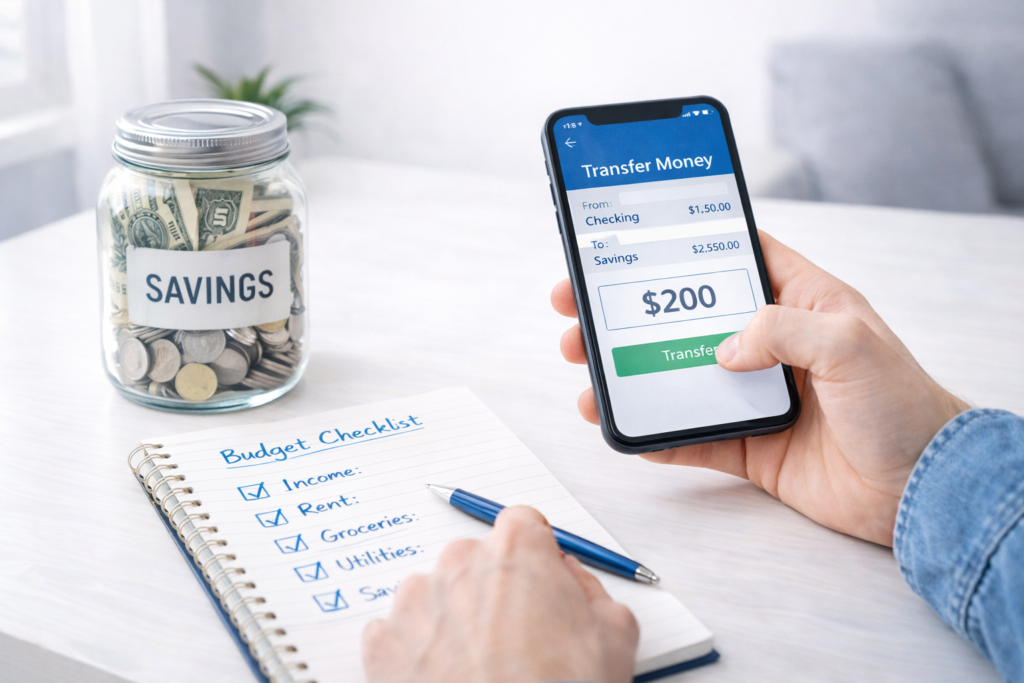
A budget on paper is easy. A budget in everyday life is harder. That is why a successful monthly budget must be flexible, realistic, and easy to maintain.
Track your spending weekly
Do not wait until the end of the month to review your spending. Check your progress once a week.
Ask yourself:
- Am I staying within my grocery budget?
- Did I overspend on eating out?
- Do I need to adjust a category?
Small weekly corrections are easier than fixing a full month of overspending.
Expect irregular expenses
Not every expense shows up every month. Some bills happen only a few times a year.
Examples include:
- Car registration
- Gifts
- School supplies
- Home repairs
- Holiday spending
A smart monthly budget includes a small amount each month for these irregular costs.
Use simple tools
You do not need fancy software to budget well. You can use:
- A notebook
- A basic spreadsheet
- A printable budget planner
- A simple budgeting app
Choose the tool that you will actually use every month.
Build in some fun money
Budgets fail when they feel too strict. Give yourself a small amount for guilt-free spending. That could be coffee, streaming, hobbies, or dining out.
This helps your budget feel sustainable instead of punishing.
Review and adjust every month
Your first budget will not be perfect. That is normal.
At the end of the month, review:
- What worked well
- Where you overspent
- Which categories need changes
- How much you saved
- Whether your goals still fit
A good monthly budget grows with your life.
Monthly budget mistakes beginners should avoid
Even the best plans can fail if you make common budgeting mistakes. Here are the biggest ones to watch for.
1. Guessing instead of tracking
Many beginners estimate spending without checking their bank statements. This often leads to unrealistic numbers.
2. Forgetting small expenses
Coffee, snacks, app purchases, and delivery fees can add up fast.
3. Making the budget too strict
If your budget leaves no room for fun or flexibility, you are less likely to stick to it.
4. Ignoring savings
Savings should be part of the plan from day one, even if the amount is small.
5. Not adjusting for real life
Life changes. Your budget should change too.
6. Using only motivation
Motivation fades. Systems last. Set up automatic transfers and bill payments whenever possible.
7. Giving up after one bad month
One rough month does not mean budgeting failed. It usually means your plan needs adjustment.
A simple monthly budget example for beginners
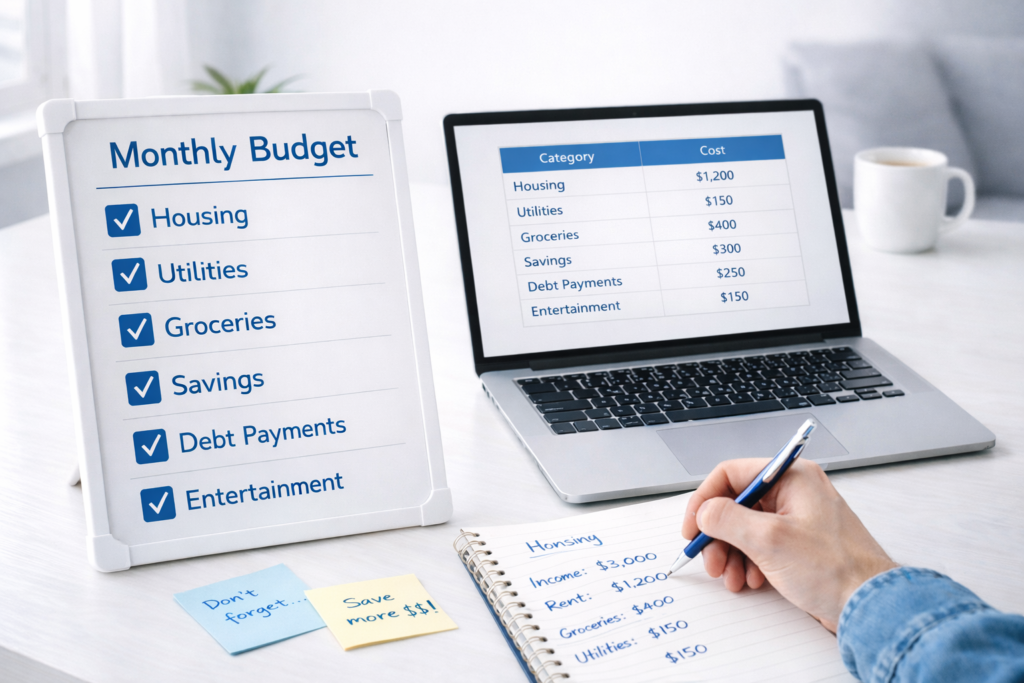
Here is a realistic example for a US beginner with $4,000 in take-home pay:
- Housing: $1,300
- Utilities: $300
- Groceries: $450
- Transportation: $300
- Insurance: $250
- Debt payments: $400
- Savings: $400
- Personal spending: $250
- Entertainment: $150
- Miscellaneous: $200
This adds up to $4,000. It is simple, balanced, and goal-focused.
The key point is not to copy someone else’s budget exactly. Instead, use examples like this to build a plan that matches your own income and priorities.
Best tips to stay consistent with your monthly budget
To make your monthly budget successful over time, keep these tips in mind:
- Budget before the month starts
- Automate savings when possible
- Use last month’s spending as a guide
- Keep category limits realistic
- Review your budget every week
- Celebrate small wins
- Focus on progress, not perfection
Budgeting is a skill. Like any skill, it improves with practice.
FAQs
1. What is a monthly budget?
A monthly budget is a spending and saving plan that helps you manage your income and expenses over one month.
2. How do I start a monthly budget for the first time?
Start by calculating your take-home income, listing all expenses, setting goals, and assigning money to each category.
3. What is the best monthly budget method for beginners?
The 50/30/20 method is often the easiest starting point because it is simple and flexible.
4. How much of my monthly budget should go to savings?
A common goal is 20%, but any consistent amount is helpful when you are just starting.
5. Should I include debt payments in my monthly budget?
Yes. Debt payments should always be included so you can stay current and make a payoff plan.
6. How often should I review my monthly budget?
Review it weekly and make a full adjustment at the end of each month.
7. What if I fail to stick to my monthly budget?
Do not quit. Review what went wrong, adjust the categories, and keep going next month.
In conclusion
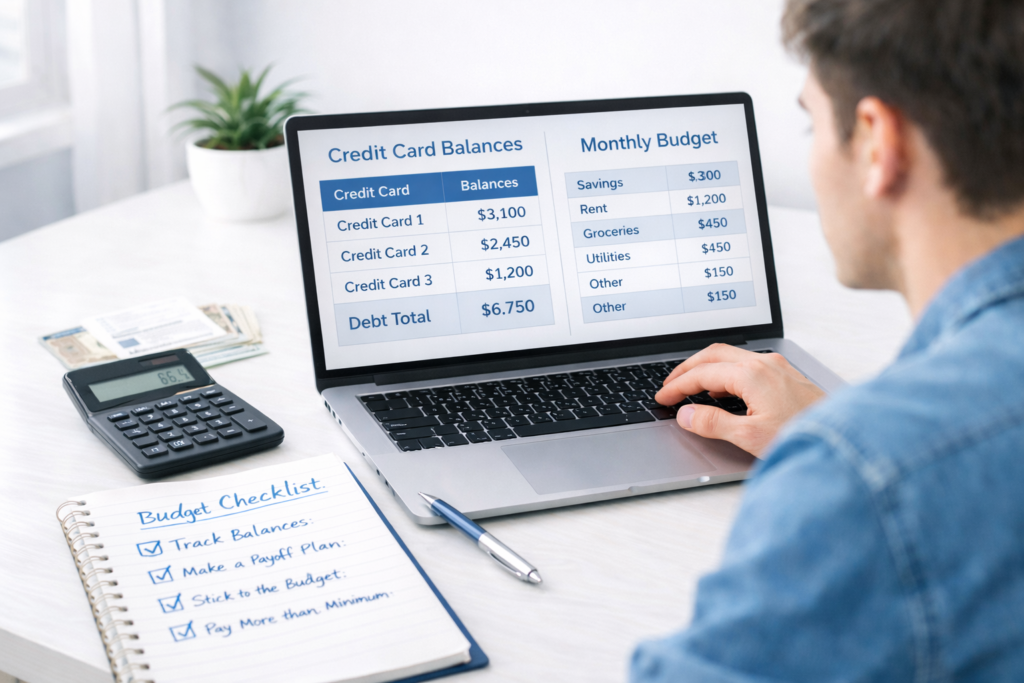
One of the most effective strategies for financial success is a well-thought-out monthly budget. It assists you in managing your expenses, lowering stress levels, accumulating savings, and achieving your objectives more quickly. More significantly, it makes you feel secure about your finances rather than perplexed by them.
Begin simply. Keep tabs on your earnings. Make a list of your costs. Select a strategy that works for you. After that, evaluate your budget each month and make gradual improvements. The most difficult monthly budget is not the best one. It is the one you can adhere to consistently.
Today, take the first step. Even a simple budget can create big financial change over time.